Why Ticket Scanning Gets Harder as Your Festival Gets Bigger
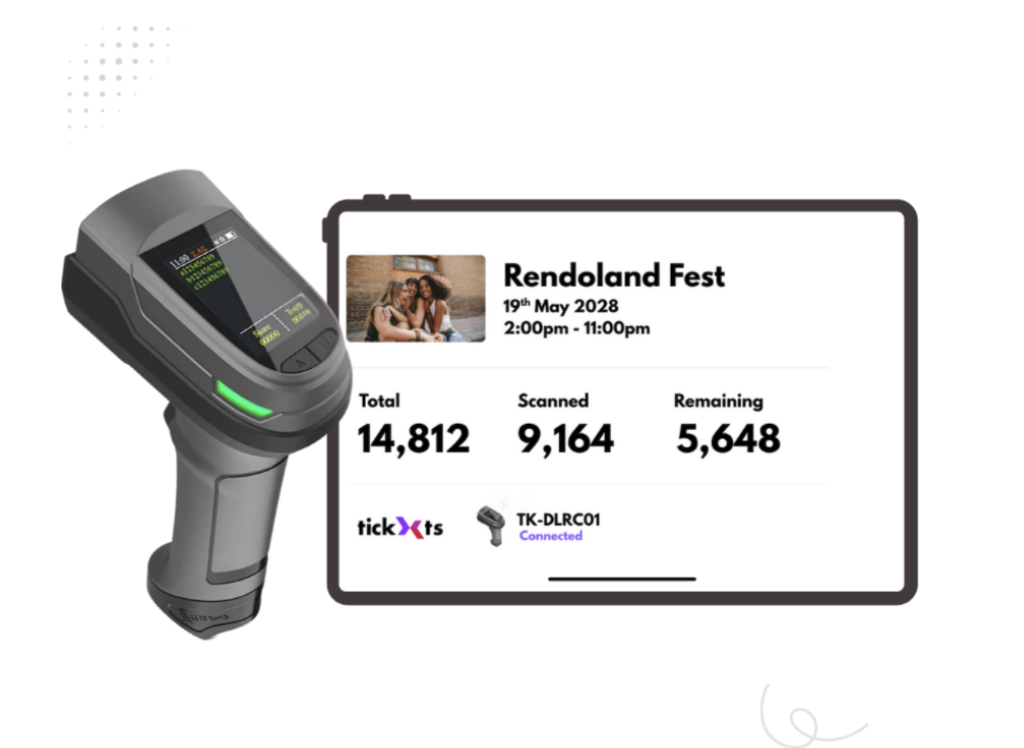
Scanning a few hundred tickets at a small venue and scanning tens of thousands across a festival weekend are, on paper, the same task. In practice, they're very different.
The hardware, logistics and potential failure points all change once you reach a certain level of footfall. Here's what changes and what organisers running large-scale events need to consider.
Speed stops being a nice-to-have
At a small door, a scanner that takes two or three seconds per ticket might barely be noticeable. Multiply that delay across tens of thousands of entries and you can quickly end up with long queues, frustrated attendees and a bottleneck that affects the rest of the event.
Bar service, stage timings and general crowd flow can all be affected when people are arriving faster than they can be checked in.
At scale, scanning speed isn't just about convenience. It's part of managing the flow of people through the entrance. Your hardware needs to keep up with continuous, high-volume traffic rather than occasional bursts.
A single point of failure becomes a much bigger problem
If one scanner goes down at a 200-capacity gig, a staff member may be able to manually check names against a list while the issue is resolved.
If one scanner goes down during a festival's peak entry window, that's potentially thousands of people funnelled into fewer working lanes within minutes.
That's why reliability becomes more important as numbers increase. Your scanning setup needs to be able to handle a busy entry period without one device issue affecting the wider operation.
Multiple gates mean you need to know who scanned what, and where
Large events rarely rely on a single entrance. Once you're managing several gates and a larger door team, another challenge appears: knowing where each ticket was checked in and which scanner processed it.
This isn't about surveillance. It's about having a clear record when something needs to be checked.
If a dispute comes up, such as a duplicate scan or a guest saying they were turned away incorrectly, your team needs to be able to look back and understand what happened.
Recording which scanner checked in each guest gives organisers a clearer picture across every entrance, rather than leaving them to work out where or how a ticket was scanned.
Compatibility can't be an afterthought
At high volumes, organisers are rarely selling tickets through just one channel. A festival might have tickets moving through Eventbrite, Skiddle, Dice, Ticketmaster, and a handful of resale or add-on platforms simultaneously. Scanning hardware that only works with one system creates a logistical headache nobody wants to solve on event morning.
This is where a straightforward setup process matters. Uploading barcodes as a CSV and having scanners ready to go, regardless of where the ticket was originally sold, removes a layer of risk that specifically shows up once an event reaches a larger, more fragmented ticket base.
The cost of getting it wrong scales too
A scanning issue at a small event is an inconvenience. At a major festival, it's a reputational and operational risk. Long queues make headlines, frustrated attendees post about it, and safety concerns around crowd buildup are taken far more seriously by licensing authorities and insurers alike.
Planning entry like the scale demands it
The bigger an event gets, the more "good enough" hardware stops being good enough. Speed, reliability, traceability across gates, and compatibility with however tickets were sold all move from preferences to requirements as crowds grow.
For organisers running large festivals or high footfall events, treating entry infrastructure with the same seriousness as stage production or security isn't overkill. At that scale, it's the same category of risk.
If you're weighing up what your event's entry setup actually needs, it's worth seeing what scanner hire looks like in practice before doors open.
Last updated: 2 weeks ago
Published: 7th Sep, 2026